A Photographer’s Guide to Horsey Gap & Winterton Beach During Grey Seal Pupping Season
How to visit responsibly and capture beautiful images whilst putting the welfare of these incredible animals first.
Every winter, the Norfolk coastline becomes the stage for one of Britain’s most extraordinary wildlife events. From November through January, thousands of grey seals gather along the beaches at Horsey Gap and Winterton-on-Sea to give birth. Pups with snowy white fur lie tucked into the dunes, mothers patrol the shoreline, and the beach fills with an atmosphere that’s both wild and unexpectedly peaceful.
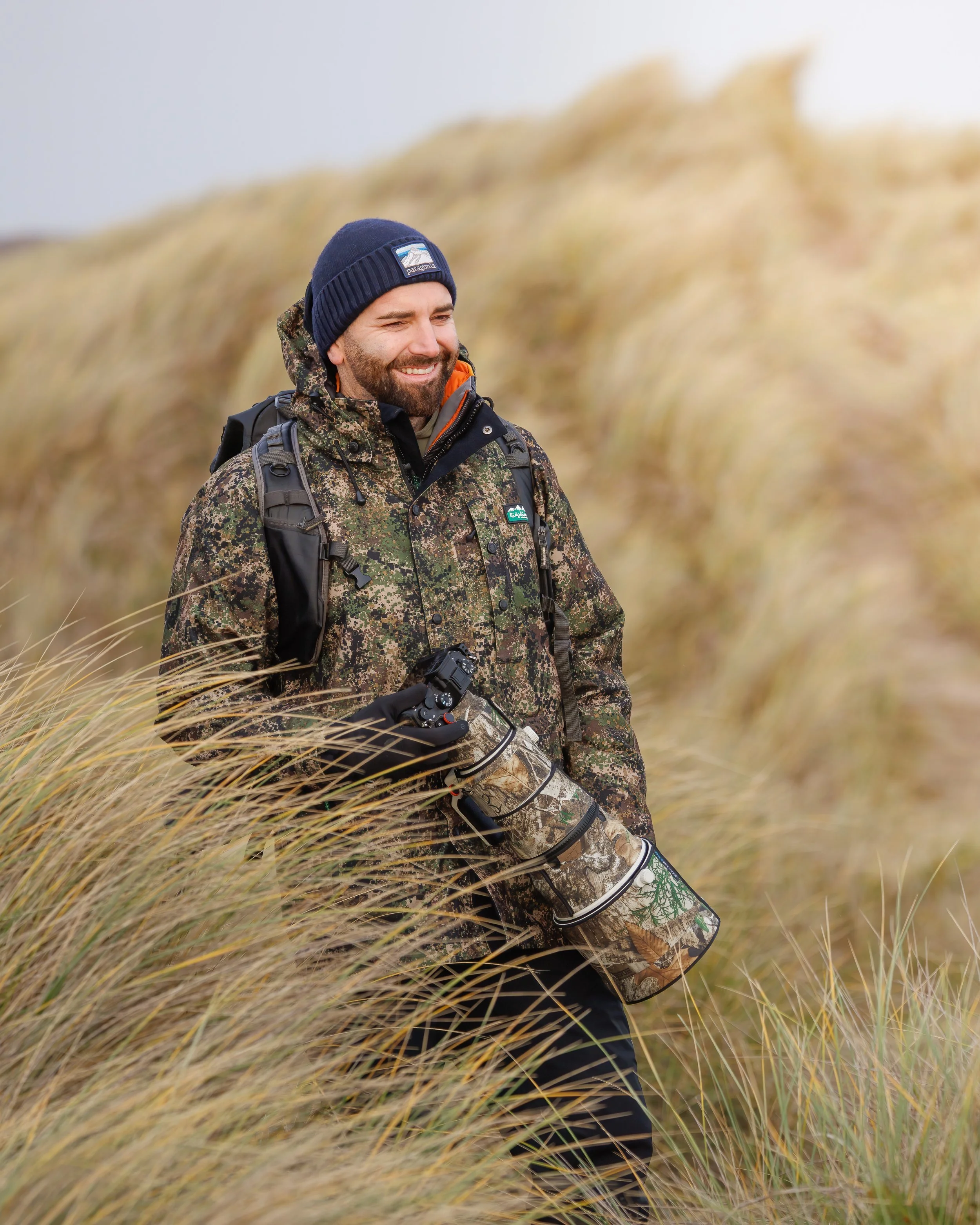
This is an unforgettable experience for anyone, but especially for wildlife photographers. Having recently spent time here photographing the colony, I wanted to put together a helpful guide for anyone visiting this winter, with an emphasis on responsible behaviour, respect for wildlife, and how to create powerful images without disturbing the seals.
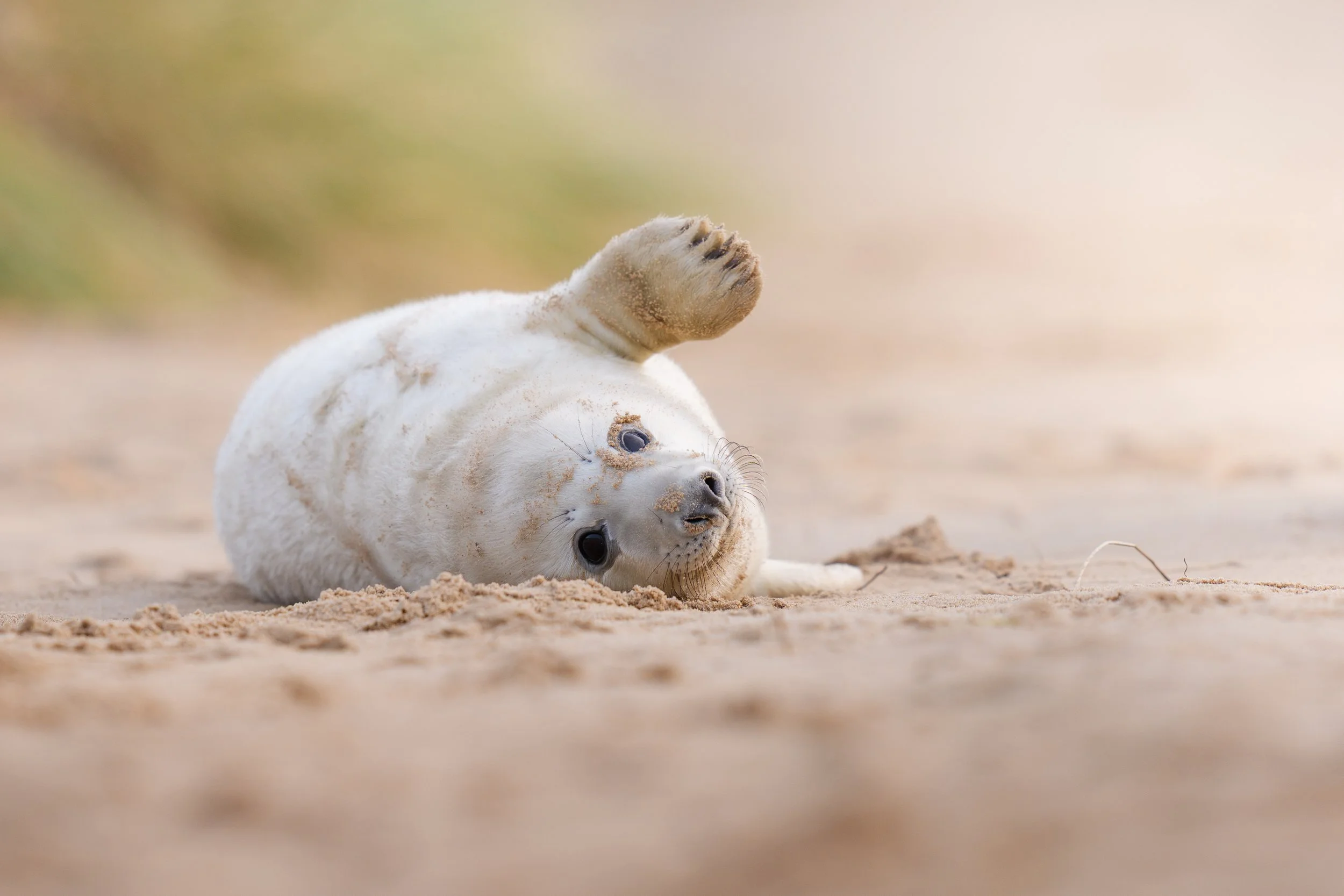
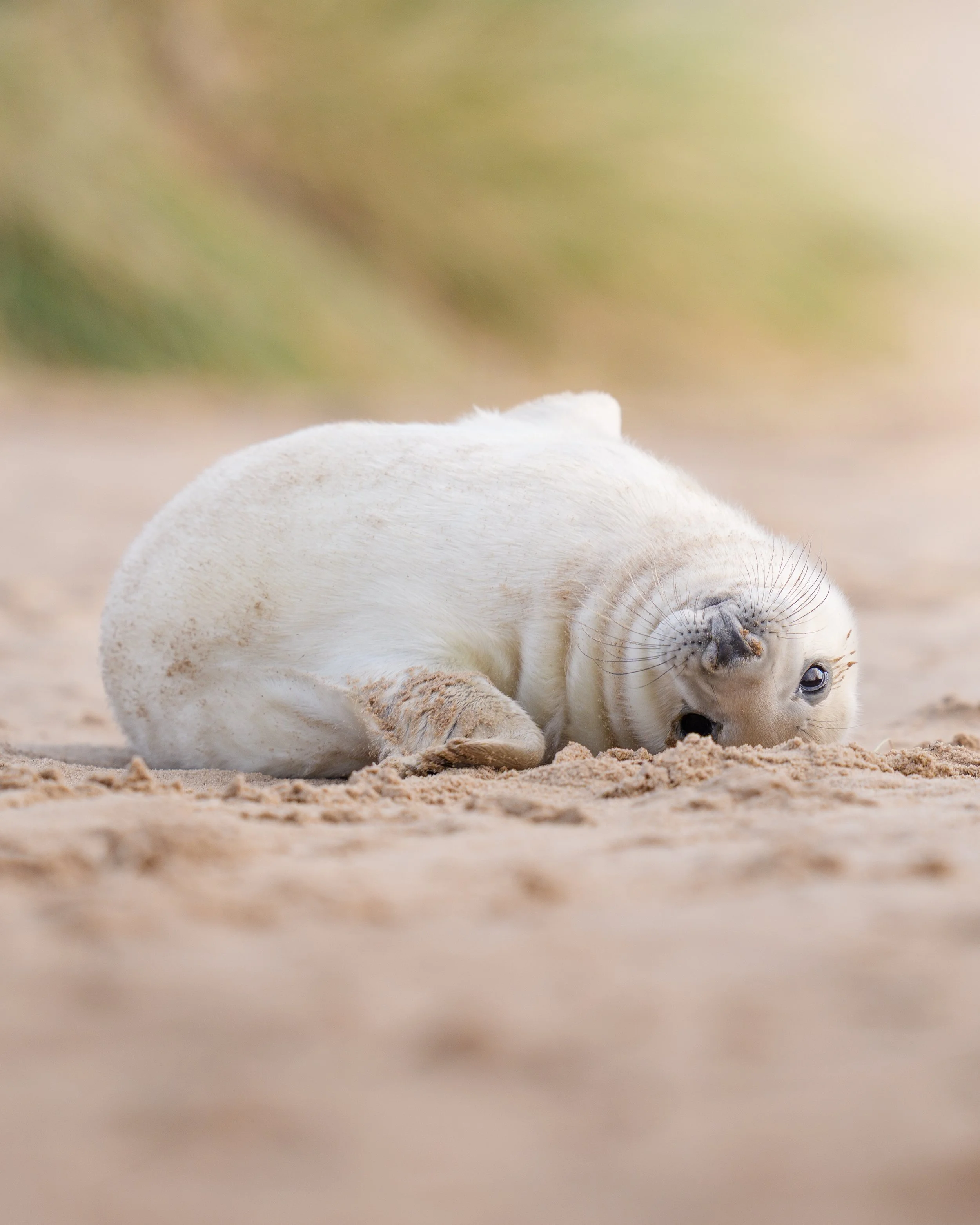
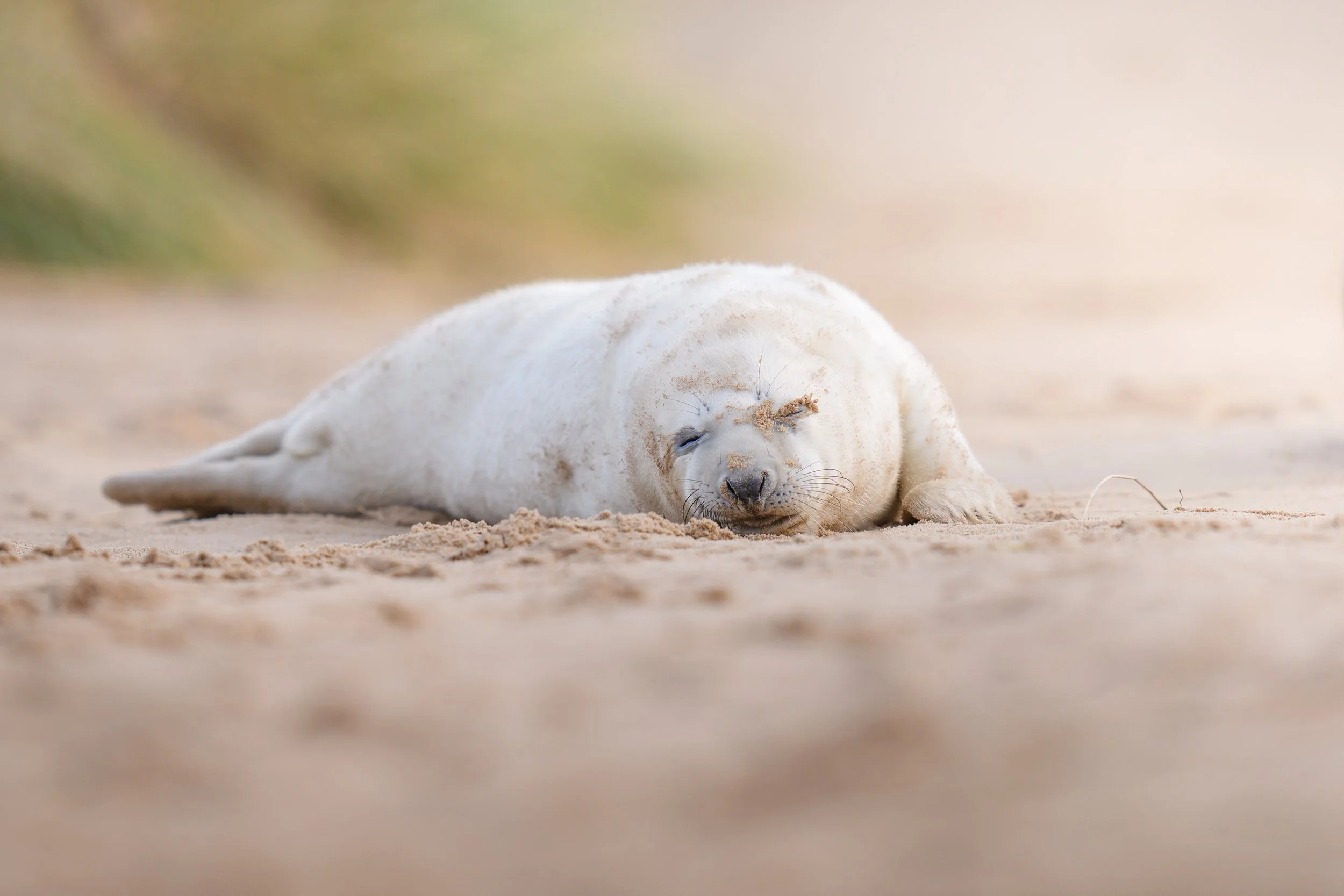
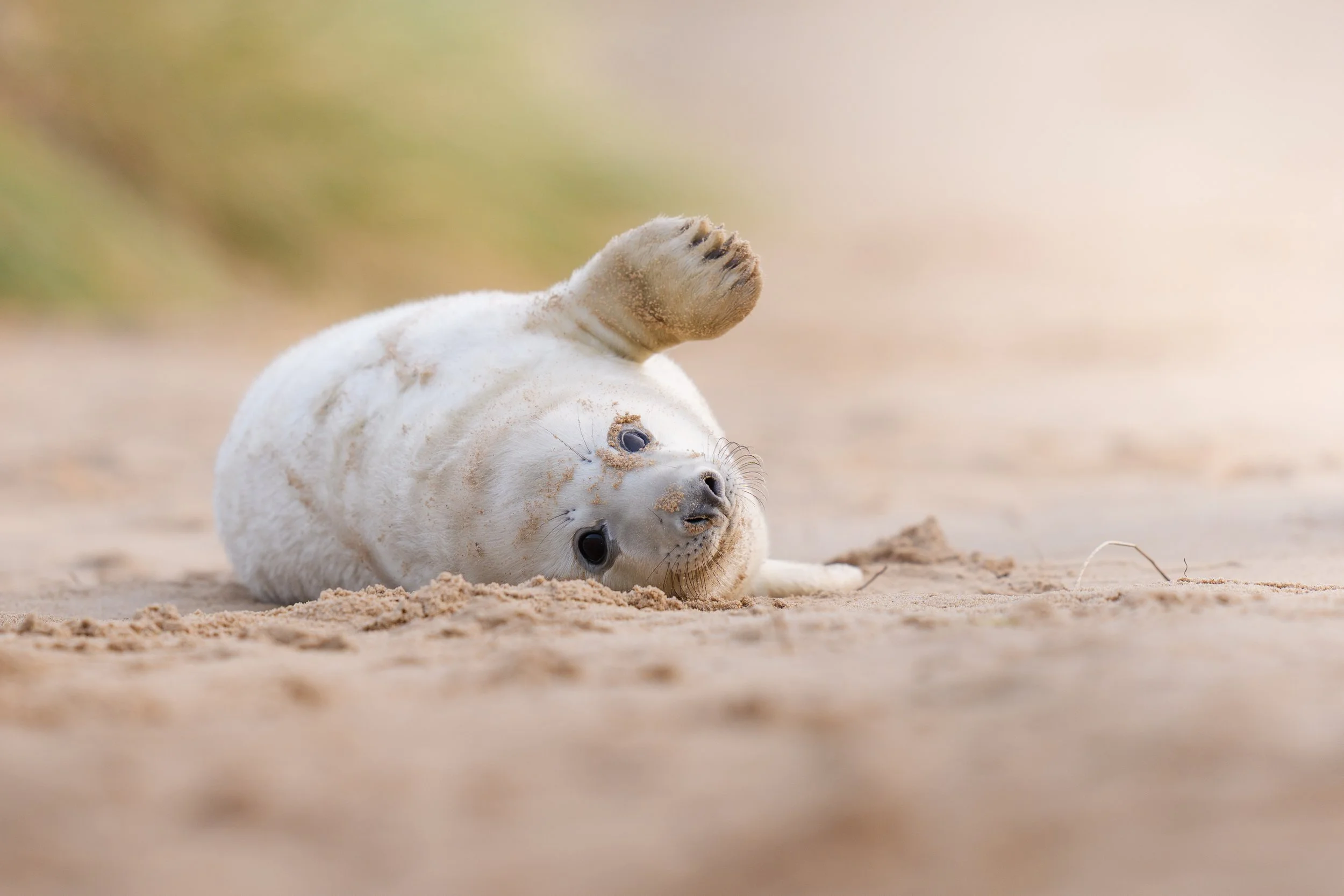
Grey seal pup lying in the dunes at Horsey Gap during winter pupping season
Where to See the Seals
Horsey Gap and Winterton Beach sit on the east coast of Norfolk, forming part of one of the UK’s most important grey-seal rookeries. During the pupping season, the beach itself becomes a protected area, and visitors are not advised to walk on the sand. Instead, you view the seals from designated roped-off paths and the top of the dunes, which offer excellent vantage points and a safe environment for both you and the seals.
Volunteers from Friends of Horsey Seals are often present to guide visitors, answer questions, and help ensure everyone remains at a safe distance.
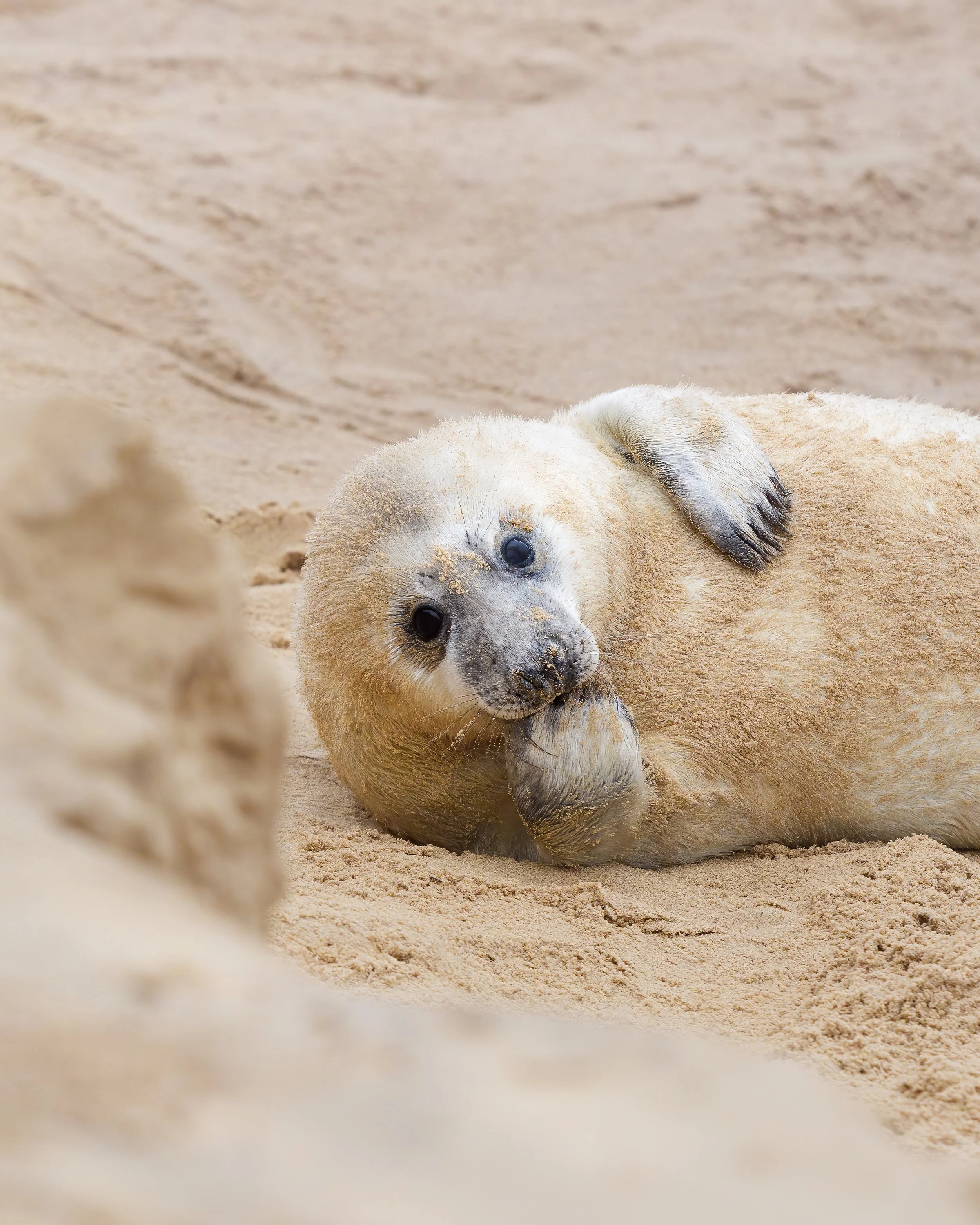
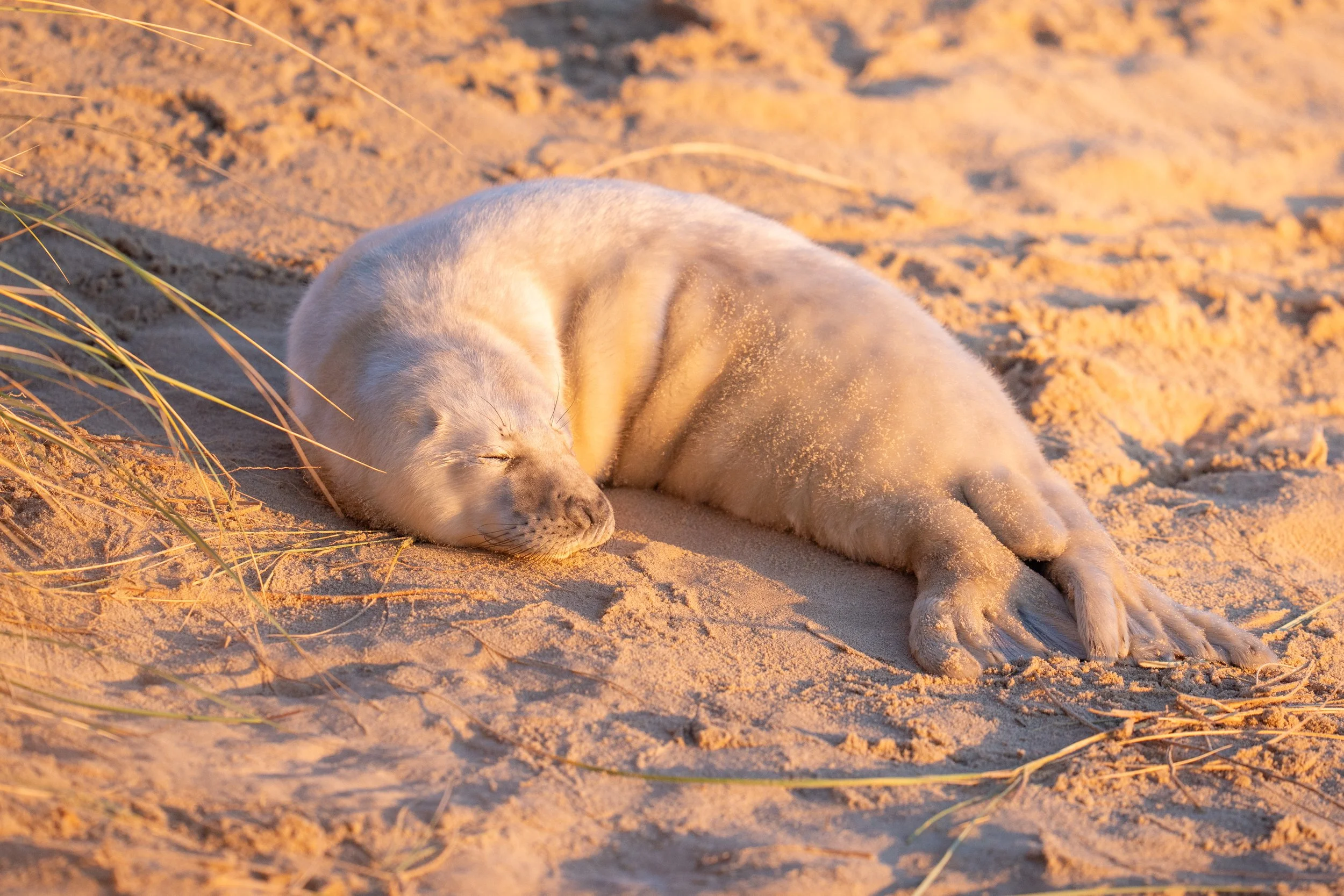
Visiting Responsibly - What You Need to Know
Seal pups are incredibly vulnerable. Even small disturbances can stress the mothers or cause pups to become separated, which may be fatal. The following guidelines aren’t just suggestions, they are essential:
1. Keep a Generous Distance
The minimum distance recommended by some sites is 10 metres, but wardens often advise much more — 30–100 metres where possible.
A long lens makes this easy and still allows you to capture detailed images.
If a seal looks up, shuffles, or changes behaviour, you’re too close — step back immediately.
2. Don’t Walk on the Beach During Pupping Season
The entire beach becomes a nursery. Walking among the seals is dangerous for you, damaging to the dunes, and extremely stressful for the animals.
Stick strictly to marked dune paths and viewing platforms.
3. Don’t Come Between a Mother and Pup
This is one of the largest causes of pup mortality.
If a mother becomes frightened and flees, she may never return.
4. Dogs Are Strongly Discouraged
Even calm dogs can panic seals.
If you must bring a dog, it must be on a short leash and remain on the dune paths - but the best advice is simply to leave dogs at home during pupping season.
5. No Touching, No Flash, No Loud Noise, No Selfies
Seal pups may appear alone — but they are rarely abandoned.
Never attempt to touch or move a pup.
Avoid flash photography or sudden movements.
Keep your voice low; respect the colony’s calm.
6. Protect the Dunes
The dunes are fragile and easily eroded.
Walking off-path damages vegetation and habitat - so please stay within roped areas.
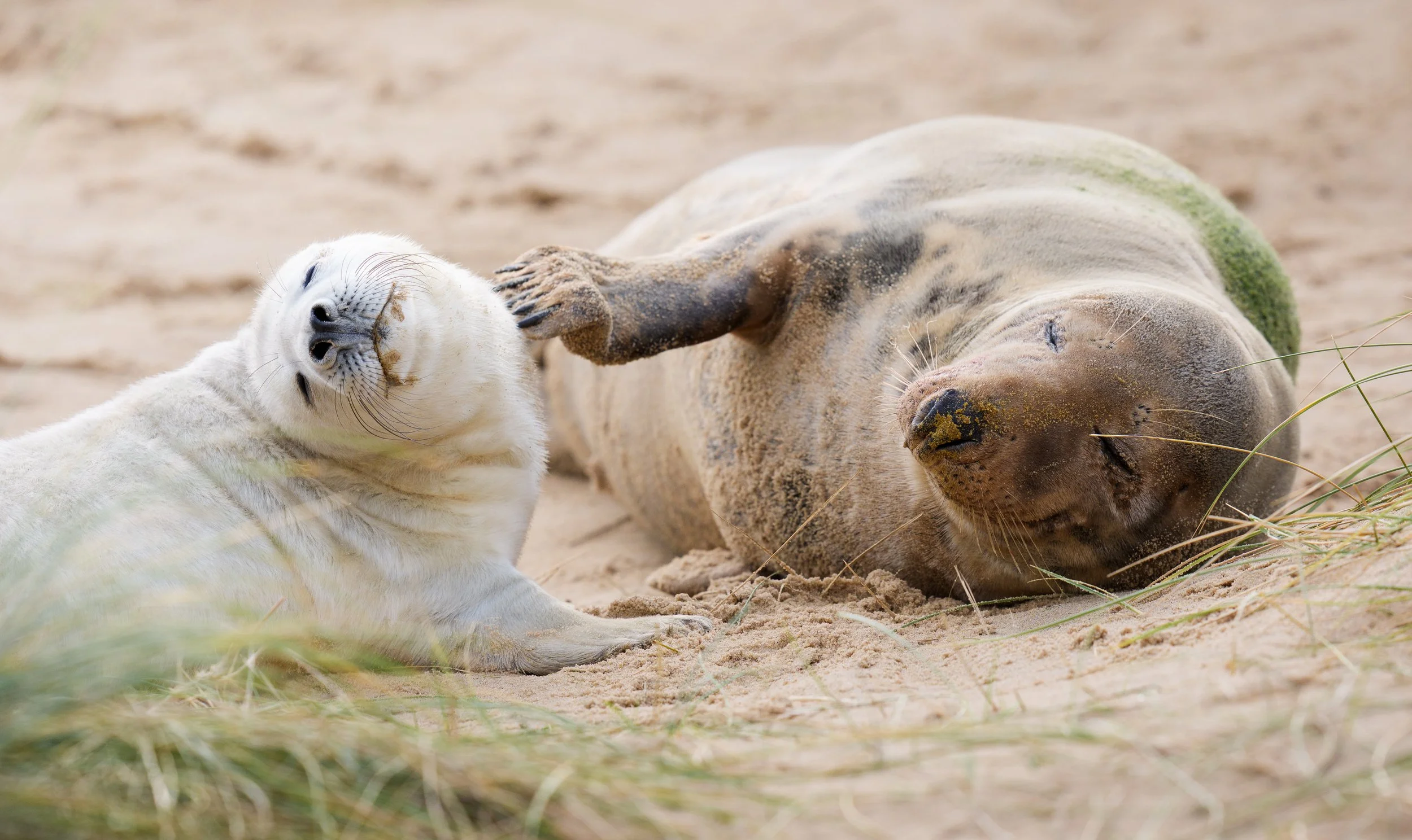
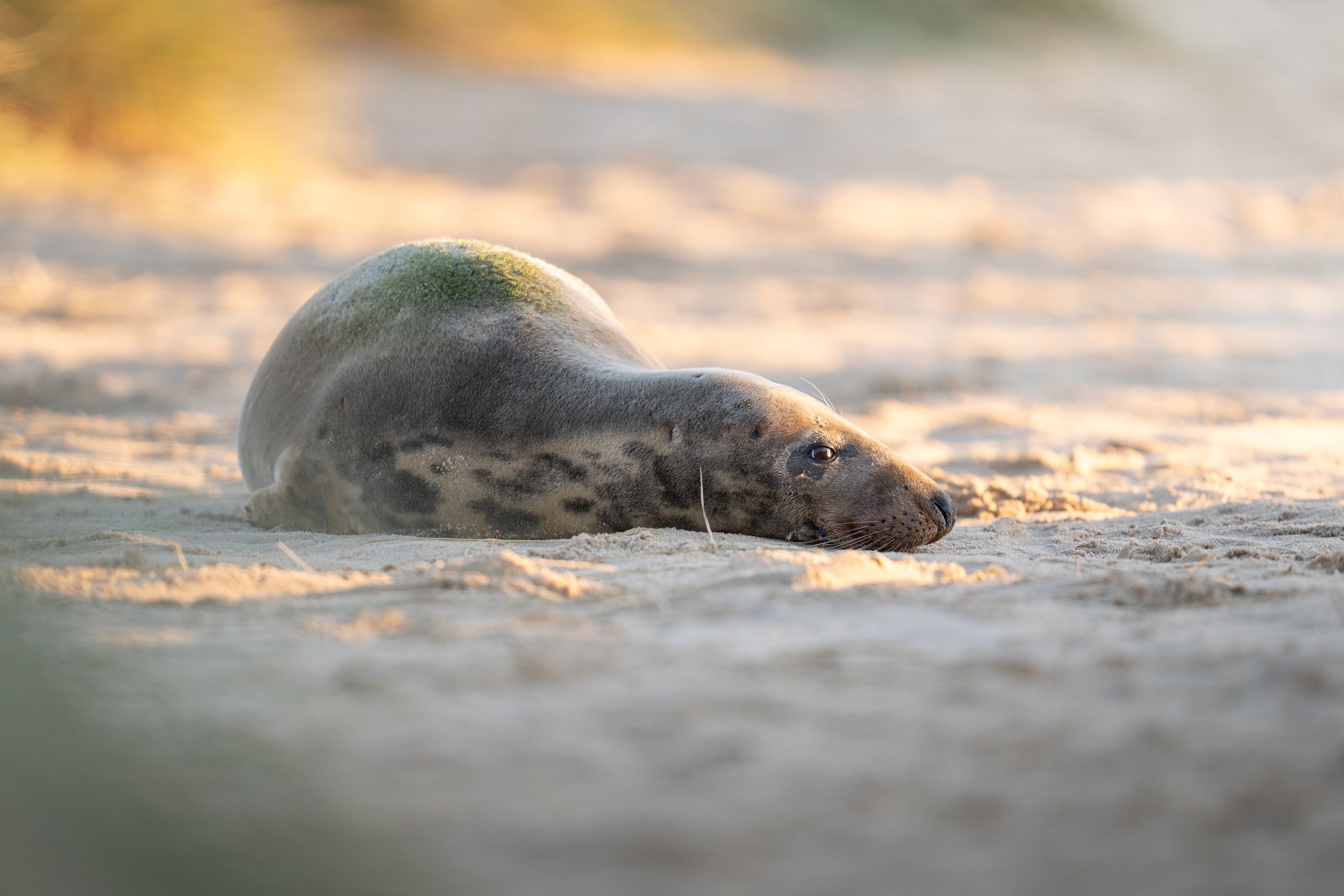
Mother grey seal interacting with her newborn pup at Winterton Beach, Norfolk
Photography Tips - How to Capture the Moment Without Disturbance
As a photographer, your priority is always welfare first. With careful planning and patience, you can still create emotive, storytelling images that reflect the beauty of this coast.
1. Use a Long Lens (300mm or longer)
Because you cannot access the beach and must remain at a distance, your lens choice is key.
A telephoto allows you to fill the frame while giving the seals space.
2. Arrive Early or Stay Late
Winter sunrises and sunsets in Norfolk are spectacular — soft, low light that glows across the dunes.
Early mornings are also quieter with fewer visitors, offering calmer shooting opportunities.
3. Observe Before You Shoot
Watch the seals’ behaviour: mothers returning from sea, pups stretching or rolling, or bulls posturing or vocalising. These small moments tell the story of the colony far better than rapid-fire shooting.
4. Work With the Weather
Winter storms, mist, dramatic skies, salt spray - Norfolk gives you atmosphere in abundance.
Embrace the wildness. Sometimes the moody conditions make the best images.
5. Stabilise Your Camera
Shooting from the dunes can be uneven and windy.
A monopod, tripod, or beanbag can help anchor your camera for sharper shots.
The Magic of the Seal Colony
Standing on the dunes at Horsey or Winterton, looking out across hundreds of seals scattered along the sand, is a humbling experience. The soft calls of pups, the crash of the North Sea, the cold winter wind - it all blends into a moment that feels entirely wild and deeply moving.
This place belongs to the seals. We are simply guests, lucky enough to observe their world for a brief moment each year.